Fable 5.2 Built a Browser Shooter in a Few Hours.
No models, no textures, no audio. All computed at load.

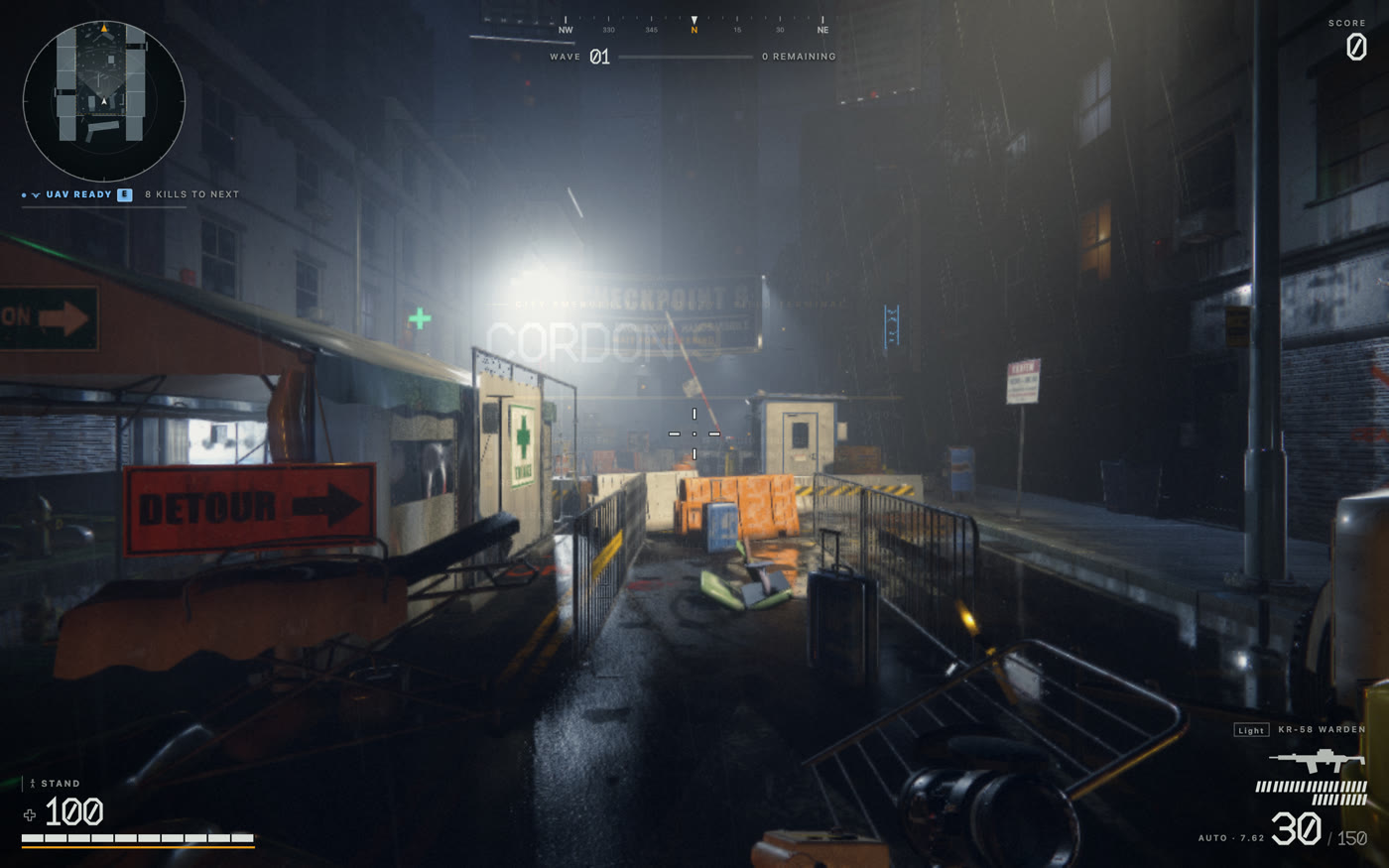
Aravind Srinivas, Perplexity's CEO, posted this on Wednesday afternoon: he let a Perplexity Teammate run on Claude Fable 5.2 for a few hours, and it built an endless zombie shooter you can play in a browser. His words for the method were "no use of any 3D assets. Just rawdogging it all in code."
It is live at cordon9.pplx.app, so the claim is checkable in about thirty seconds. We checked it.
From the video Aravind Srinivas posted with the build, trimmed and muted. The game is live at cordon9.pplx.app.
The claim the game makes about itself
The loading screen is more specific than the tweet, and more falsifiable. While it compiles, it says:
"No asset files. No models, no image textures, no audio samples. The street, the rifle, the dead, the drone, every sound and the music are generated in code while the page loads."
Its loading stages are listed as starting the renderer, baking surfaces, building the street, assembling weapons, waking the dead, and synthesising sound. Seventeen surface bakes, then shaders at 86%, then ready.
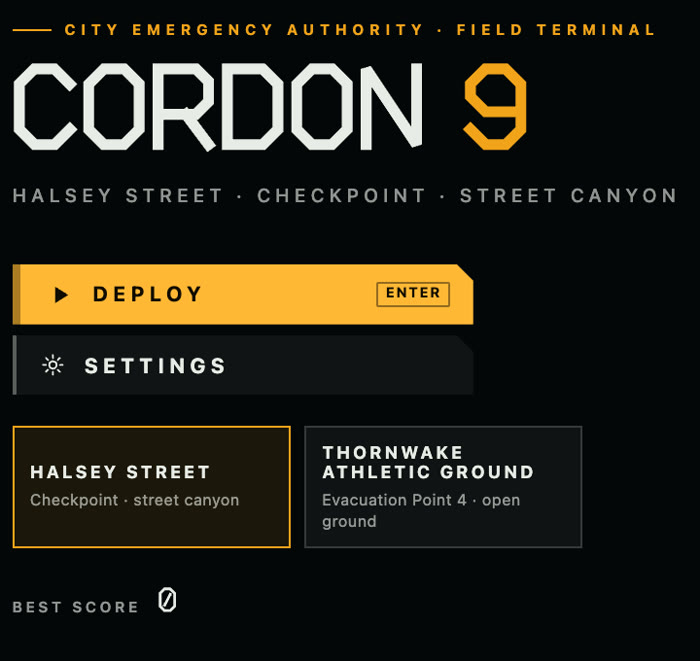
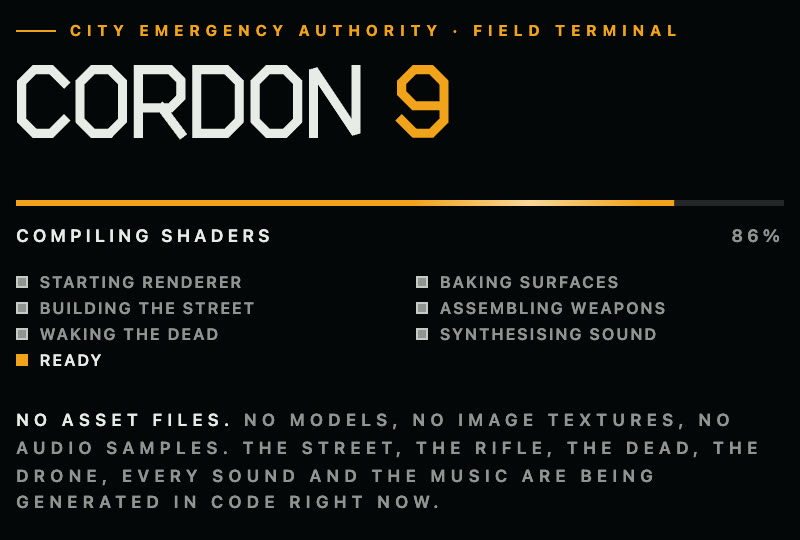
Both captured from the live game, 11 November 2026.
We opened the network tab
The loading screen is a claim, and a browser can check it. We loaded the game with the network panel recording, deployed into Halsey Street and played a wave.
The page made zero subresource requests. Not one image, not one audio file, not one external script. Nothing before the game started, and nothing while it ran.
0
Files fetched after the page itself, measured before and during play.
70,519
Lines of JavaScript, in a single inline script tag.
700 KB
The whole game over the wire. 3 MB once decompressed.
What arrives is one HTML document. Inside it sits a single <script> of 3,155,746 characters. The page carries no <img> tags and no audio or video elements at all. The renderer is WebGL2 on one canvas, and the sound is Web Audio, computed rather than played back.
So the loading screen is telling the truth. Those seventeen surface bakes are your machine doing work that would normally have been finished months earlier by an artist and shipped to you as files.
Why this is different from shipping a game
Plenty of people have had a model write a game this year. The usual version pulls sprites, models and audio from somewhere: an asset store, a template, a texture pack. The code is generated and the content is borrowed.
Here there is nothing to borrow from. Every surface in that street is a procedure. The rain, the reflections, the rifle, the zombies and the music are all computed at load time from code the model wrote. That is a harder problem than it looks, and it is the reason the loading screen exists at all.
What a 70,000-line single file is good for
Seventy thousand lines in one file is not an architecture to copy. There is no module boundary, no test seam, and no way for two people to work on it at once. If this were a product rather than a demo, the first serious change would hurt.
That is the point to take, not the point to argue with. The artifact is disposable and the capability is not. A model that can hold a coherent 70,000-line program in one pass, and have it compile, render and stay playable, is a model you can point at a throwaway internal tool and expect something that actually runs.
So the useful question is not whether to ship generated code like this. It is which of your own asks are this shape: the one-off scripts nobody owns, the internal dashboard nobody maintains, the format converter somebody rewrites by hand twice a year. Those are the jobs where "no files, one page, works now" is the right answer and nobody has to live in the code afterwards.
What is not established
Srinivas said "a few hours" and did not publish a token count, a cost, a transcript or a number of runs. Nobody outside Perplexity can say how much human steering happened, and a Teammate run is a product with its own scaffolding, so this is not a clean measure of the model alone. Our own check has the same limit: measuring the delivered page proves what shipped, not how it was made. Zero asset files is a fact about the artifact, not a timestamp on the work.
What is established is the artifact. It loads, it plays, and it ships no content files, and you can confirm all three yourself. That is a better class of evidence than a benchmark score, because the thing is sitting right there.
It is the second Fable 5.2 game this week with a working link attached, after a twelve-stage beat 'em up built overnight from a seven-year-old's drawings. The pattern worth noticing is not that models can write games. It is that the demos now come with a URL instead of a screenshot. It is also not two: eleven people published a playable game built with an AI coding agent this year, and one of them is on Steam.
Ship the link, not the claim.

Founder of nativefirst.ai. Runs everything on agents and writes down what works.