Fable 5.2 Wrote an Operating System From an Empty Folder. It boots on a laptop.
Eight days is the number, not the thousand agents.

The most consequential thing in Anthropic's Fable 5.2 launch is not a benchmark. It is one paragraph, four screens down, describing something an engineer did as an experiment.

"One Anthropic engineer gave Fable 5.2 the task of designing a prototype operating system. Starting from an empty folder, the model coordinated over 1,000 subagents, working around the clock for eight days writing, testing, and reviewing code. It produced a working operating system that boots on a laptop."
Eight days. One folder. No starting code.
What it actually built
Anthropic lists the parts, and the list is the claim. An operating system is not one program, it is a stack of them that have to agree with each other, and a reader can check whether the list is serious.
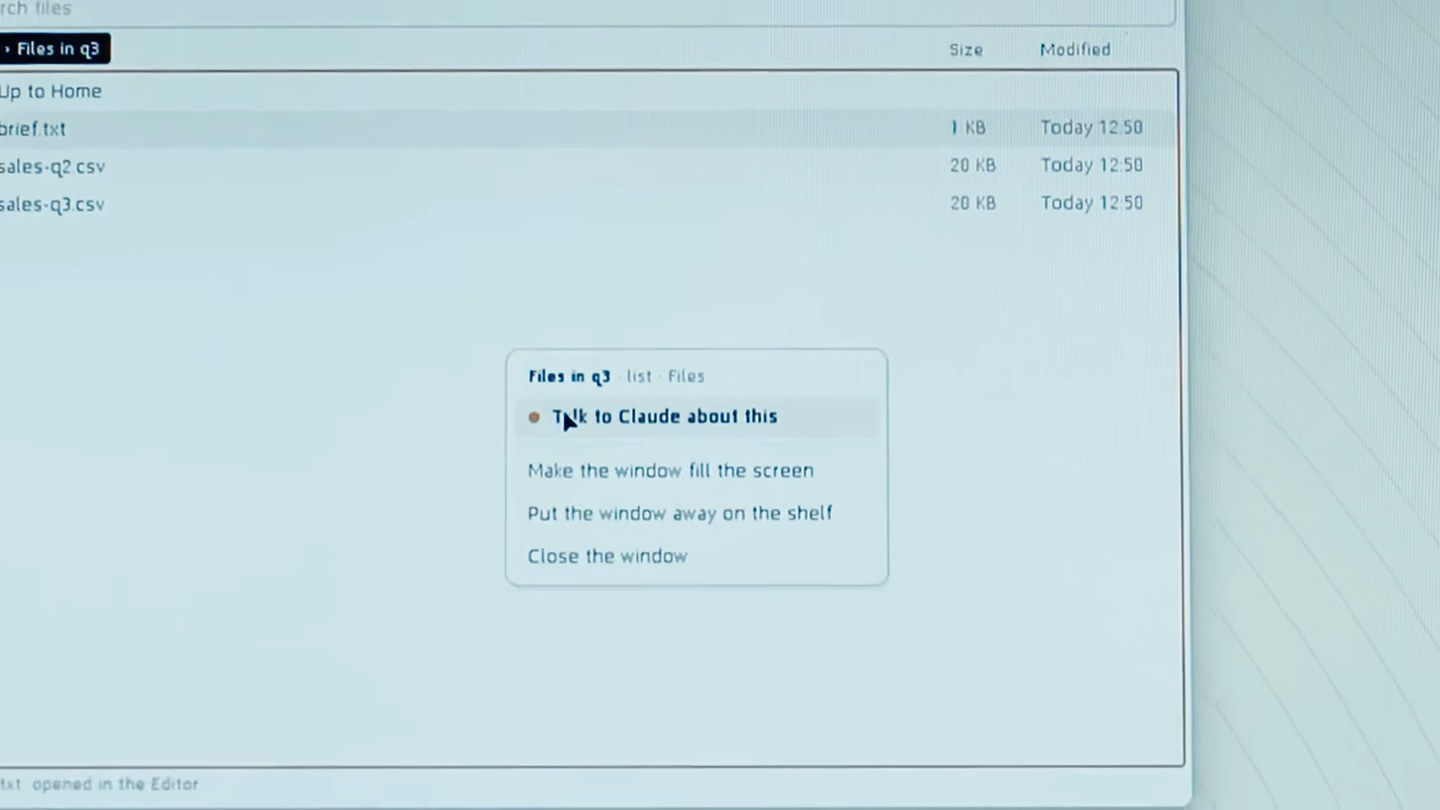
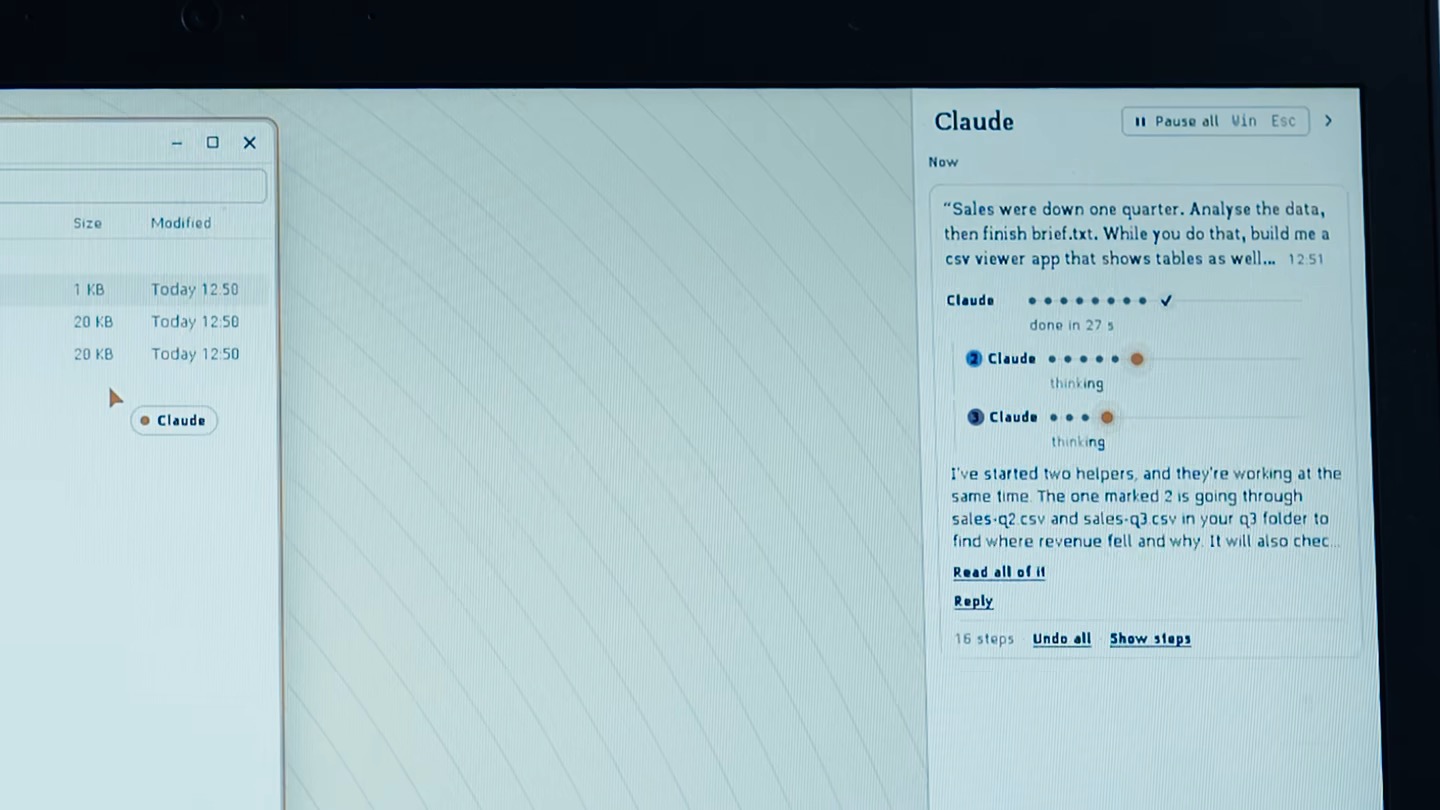
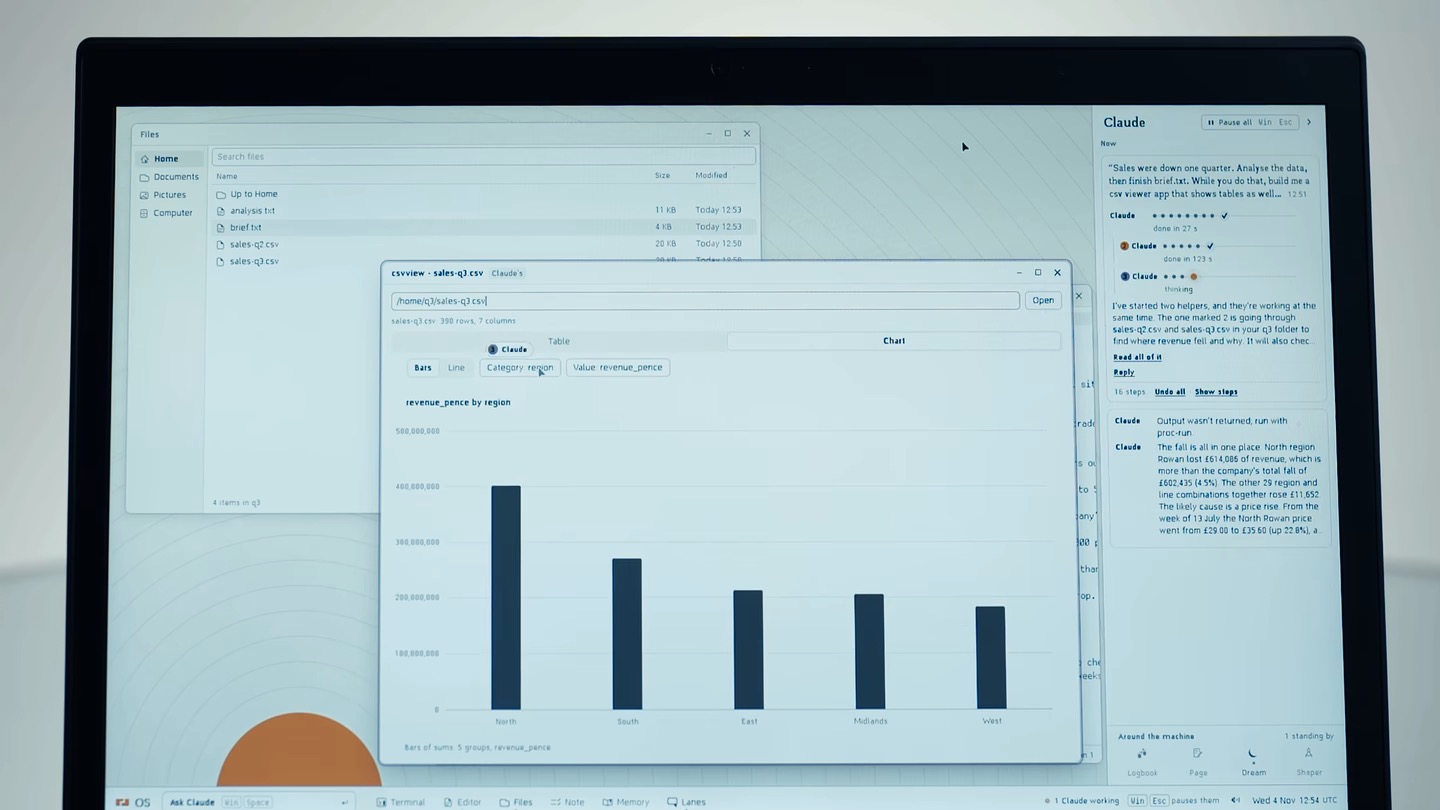
The login screen and the installer are the two that matter. A kernel that boots on the author's laptop is a weekend project with enough determination. An installer means the thing was built to be handed to someone else, and a login screen means it models more than one user. Those are the details that separate software from a demonstration.
Look at what it put in the chrome
The component list is impressive and the video is more interesting, because it shows the decisions. An operating system is mostly a set of opinions about what belongs in front of the user at all times, and this one was designed by the thing that would be running inside it.
The window menu has no Maximize and no Minimize. It reads make the window fill the screen and put the window away on the shelf, and the first item is talk to Claude about this. The taskbar carries Terminal, Editor and Files, which any system has, and then Memory and Lanes, which no shipping desktop has. The status bar says 1 Claude working, and next to it, Esc pauses them.
That last pair is the one worth stealing. The agent panel shows two numbered helpers running at once, a Pause all button, a step count, and Undo all. A model given a blank folder and eight days decided that the operating system's job was to show you what your agents are doing and let you stop and reverse them. Most companies running agents today cannot answer either question.
The number that is not the headline
One thousand subagents is the figure that will get quoted. It is the wrong one. A thousand agents is a procurement decision, and anyone with an API key can have a thousand of them this afternoon.
Eight days is the figure. It means the work survived roughly two hundred hours of its own output: code written on day one still compiling against decisions made on day six, a coordination scheme the model invented holding together long enough to be worth keeping. The failure mode of long agent runs is not a crash. It is drift, where each hour is locally sensible and the whole thing stops adding up.
This Playbook measured that same edge on Anthropic's Fermat chart this morning: a thousand agents went flat at 86% for four hours and the run had to be resumed from a save. Thirty hours was long enough to need an intervention. This run went roughly six times longer.
It keeps being the same finding
Three separate results in this launch describe one capability, and it is not raw intelligence.
In the Fermat run, Anthropic notes that Fable 5.2 started from minimal prompts and built its own ways to coordinate. In the OS experiment, one model directed a thousand subagents for eight days. And Jump Trading, testing it on quantitative research, reported that it played every role in their research system at once: code-writer, coordinator, planner, job-submitter. Their note is that previous models needed humans to rebalance those roles by hand.
That is an organisational capability rather than a reasoning one. The model is not only doing the work, it is deciding how the work is divided, and holding that division in place across days. Brian Armstrong, co-founder and chief executive of Coinbase, drew that structure by hand two days ago and published it as an org chart. Anthropic's own results suggest the model will now draw it itself.
How to read it anyway
This is a vendor describing its own experiment with no external reproduction, and it comes with the usual asterisks. The clock in the video reads 4 November, five days before the launch, so what is shown is a recording of a working build rather than a live demonstration. One engineer, one run, no stated cost, no comparison against a human team given eight days and the same budget, and an operating system that boots is a long way from one anybody would run. Anthropic links a video. Nobody outside has booted it.
What it is good for is calibration. If a frontier model can hold an eight-day build together without a human re-planning it, then the ceiling on what you can hand an agent is no longer the context window or the task's difficulty. It is how long you are willing to let something run before you look.
Most teams have never let one run past an afternoon.
The reaction to all of this arrived faster than the reading of it. Perplexity had Fable 5.2 running twelve minutes after the announcement, and a competitor had launched fifty-four minutes before it.
Try a longer leash.

Founder of nativefirst.ai. Runs everything on agents and writes down what works.