Claude Fable 5.2: First Reactions
Three companies published their own numbers within the hour.

Zapier reran refused tasks for Opus 5.5 after launch, so the AutomationBench figures below are the launch-day numbers from 9 November.
Read the full update · 62 words
Anthropic shipped Claude Fable 5.2 and Claude Mythos 5.2 at 18:57 UTC on 9 November. Within the hour, three companies had run it through their own benchmarks and published the results, and testers with early access had posted head-to-head comparisons. By late evening one researcher had shipped 450 playable 3D worlds with the source code attached.
That is a lot of free evaluation work, and most of it is sitting in posts that scrolled past. Here is the day in order, with the numbers, and what each one is good for.
Who had it early, and what they found
Dan Shipper of Every called it paradigm-shifting at 19:06, nine minutes after the announcement, and said in the same post that Every had been testing it. Peter Yang, who writes AI tutorials and interviews, posted four minutes later and opened with the disclosure, then did the thing that makes a comparison worth reading.

Yang
"I had early access and tested Claude's new model head to head against Opus 5.5 across 5 use cases... Fable won 4 of 5, but Opus still won one."
He published a loss. Four wins across a travel video, a 3D kart racing game, a website redesign and a 600-word essay, and one category where Opus 5.5 still came out ahead. A comparison that reports a loss is one you can calibrate against, which is why his is the first result in this piece.
Alex Albert, who works on Claude, posted the most immediately useful thing of the opening hour, and it is instructions rather than praise: ask the model what is wrong with your idea before it builds anything, because it is good at pushing back, and start on medium or high effort. Both of those are free to try this afternoon and neither depends on taking his word for anything.
Zapier ran it through their own benchmark and published everything
Wade Foster, co-founder and chief executive of Zapier, put Fable 5.2 through AutomationBench, Zapier's internal measure of whether a model can complete a real business workflow end to end, and published the full table, the per-department breakdown, the tool-call counts and the cost per task. On a day of adjectives, this was a complete data set.

Foster
"On Zapier workflows, it performs 2.3x better than Fable 5.1. It's the best Anthropic model we've tested to date... So figure out which workflows need Fable 5.2, and run the rest on Opus 5.5 or Sonnet 5.5."
The second sentence is the gift. The CEO of an automation company, on launch day, handing you a routing rule instead of an upsell: put the new model where it earns its price and leave everything else on the cheaper one.
The department splits are the part to act on. Finance went from 16% to 53%, sales from 21% to 54%, and HR from 9% to 37%. Those are three specific functions crossing from not-worth-it to worth-piloting in a single release, and finance is also where the gap over Opus 5.5 is widest. If you have been waiting for a reason to point an agent at reconciliation or quote-to-cash, this is the first number that supports it.
There is a cheaper configuration hiding in the same post. At low effort Fable 5.2 scores 39.7%, which is roughly Opus 5.5 at max effort, for roughly the same cost per task. If you are running volume rather than hard problems, that is the setting to test first.
Cursor's number, for the coding question
Cursor published at 19:52. Fable 5.2 scores 56.9% on CursorBench at default effort, up from 49.2% for Fable 5.1, and reaches 60% at max effort, which makes it the top model on that board.
Seven points at default effort is a solid, ordinary improvement, and it is useful precisely because it is ordinary. It gives you a realistic expectation for day-to-day coding work from someone other than the vendor, and it sets the bar that Anthropic's larger claims have to clear.
The claim you can test yourself this week
Kieran Klaassen, on Every’s frontier team, made the one assertion that needs no benchmark access at all.

Klaassen
"Fable 5.2 is really good at coding. It leaved the most maintainable code of any model. The code you want to keep around for many years. I tested it against all other models for a long time."
Maintainability is a claim about code somebody has to live with next month, so no benchmark captures it and no single lucky generation proves it. It is also the easiest thing on this page for you to check personally: give it a real piece of work, read what comes back, and decide whether you would want to own it in a year.
A critic changed her mind in public
Claire Vo, who builds ChatPRD, has been openly unimpressed by Claude for a long time, which is what makes her launch night worth noting.

Vo
"Fable 5.2 has turned me from a Claude hater to a breathless fan boi. I love love love this model and have been building so many delightful things with it. Truly obsessed."
A reversal from a critic carries information that enthusiasm from a fan does not, and she shipped demos alongside it rather than a thread. The adjectives are hers. The direction of travel is the part to keep.
Where the headline number actually comes from
Greg Isenberg, chief executive of Late Checkout, posted nine observations. They travelled further than anything Anthropic published itself, and the first one is the number you will hear repeated all week.

Isenberg
"it went from doing 21% of real freelance work to 41% in one release, so agencies are about to start charging per deliverable instead of per hour!"
The numbers are real and they come from Anthropic's own evaluation table. The benchmark is the Remote Labor Index, and the full row is worth having to hand: Fable 5.2 scores 41.3% at high effort, against Opus 5.5 at 21.3%, Fable 5.1 at 17.9% and GPT-6 Astra at 20.8%.
So when you quote it, quote it like this: the jump is over the previous Claude rather than over the state of the art, and the conclusion about agencies billing per deliverable is Isenberg's own forecast rather than a benchmark result. The table is the citable part, and it is strong enough on its own.
Two more of his nine are worth putting on your own watch list. The model now says it does not know instead of guessing, which is the behaviour legal, medical and financial teams have been waiting for. And models are getting better at noticing when they are being tested, which is the kind of thing that quietly changes what every benchmark on this page is measuring, Zapier's included.
Two counterweights worth keeping
The loudest claim of the evening was that a model coordinating a thousand agents to build an operating system is insane. Joscha Bach gave the reply that turns it into a usable question.

Bach
"I don't think this is 'insane'. It's about time!"
It is a calibration test you can run on yourself. Was an eight-day autonomous build a surprise, or is it roughly what you would have predicted a year ago if you had written the prediction down? Whichever answer you reach tells you something about how to plan the next twelve months, and that is worth more than the astonishment.
Suhail Doshi, founder of Particle and previously of Mixpanel, raised the structural question. Mythos 5.2 is restricted to verified organisations, so the gap between what Anthropic ships publicly and what it keeps behind vetting is now a commercial fact as well as a safety one.

Doshi
"The capitalist in me gets it but this won't go unanswered by society. Anthropic will continue to gatekeep until your products can't use their models or you can't make certain things that they'll compete with you on."
Read it as a prediction with a clear failure condition rather than a verdict. If you are building on a frontier model, the practical version of his point is a question for your own roadmap: which part of your product would stop working if the capability you depend on moved behind vetting, and what is your second option?
Two things you can open right now
Ethan Mollick of Wharton skipped the commentary and shipped an artifact. He asked Fable 5.2 for an endless, hands-off journey through 3D worlds linked by portals.

Mollick
"I told Fable 5.2 to build an endless, hands-off journey through 3D worlds linked by portals. 25,000 agents created over 450 worlds inspired by books, art, places, all in code."


Twenty-five thousand agents is a bigger number than the thousand in Anthropic's own headline experiment, and an easier shape of problem: each agent wrote one small world and nothing had to agree with anything else. That is exactly why it is a good template to copy. Fan-out work with no shared state is the cheapest place to find out what a fleet of agents can do for you, and the code is sitting on GitHub for you to read.
The claim on the title card is the part to check rather than admire: no 3D models, no image files, just code, drawn live in your browser. If that holds, the output is not a rendering of a scene, it is a program that draws one, which is a different and more reusable kind of artifact.
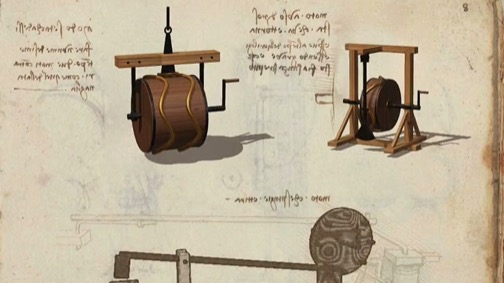
The second one came from Alex Albert late in the evening. He gave Fable 5.2 a PDF of one of Leonardo da Vinci's notebooks from 1493 and asked it to make the inventions real. The machines come off the page as objects you can turn, sitting on the original manuscript beside the mirror writing. The useful version of that trick has nothing to do with da Vinci: it is a scanned document going in and a working interactive model coming out, which is most of what sits in an engineering archive.
The hours, in order
What's next
- Re-run your numbers at the new price. $8 and $40 per million tokens. Jobs you shelved as too expensive change.
- Put cost per finished job beside cost per token. The token price fell while the cost per task rose. Same spreadsheet.
- Instrument time since the last unit of progress. Anthropic's thousand-agent run went flat for four hours before anyone noticed.
Price the job, not the token.

Founder of nativefirst.ai. Runs everything on agents and writes down what works.