ChatGPT Added Business Profiles. Here's how to claim yours.
Claim, verify, feed. Then read what the dashboard leaves out.
 ChatGPT
On Tuesday, OpenAI put businesses inside ChatGPT. Any eligible business in a country where ChatGPT is available can claim its own listing, get verified, and upload a product feed with live pricing and availability. The audience on the other side is the number OpenAI leads with: 1.2 billion people use ChatGPT every week.
Claiming is free and takes minutes. Here is how to do it, who can do more than that, and what you get back.
How to claim it
1. Go to Business Hub and claim the business. An unclaimed listing can still appear, with whatever information ChatGPT already has. Claiming is how you take authorship of it.
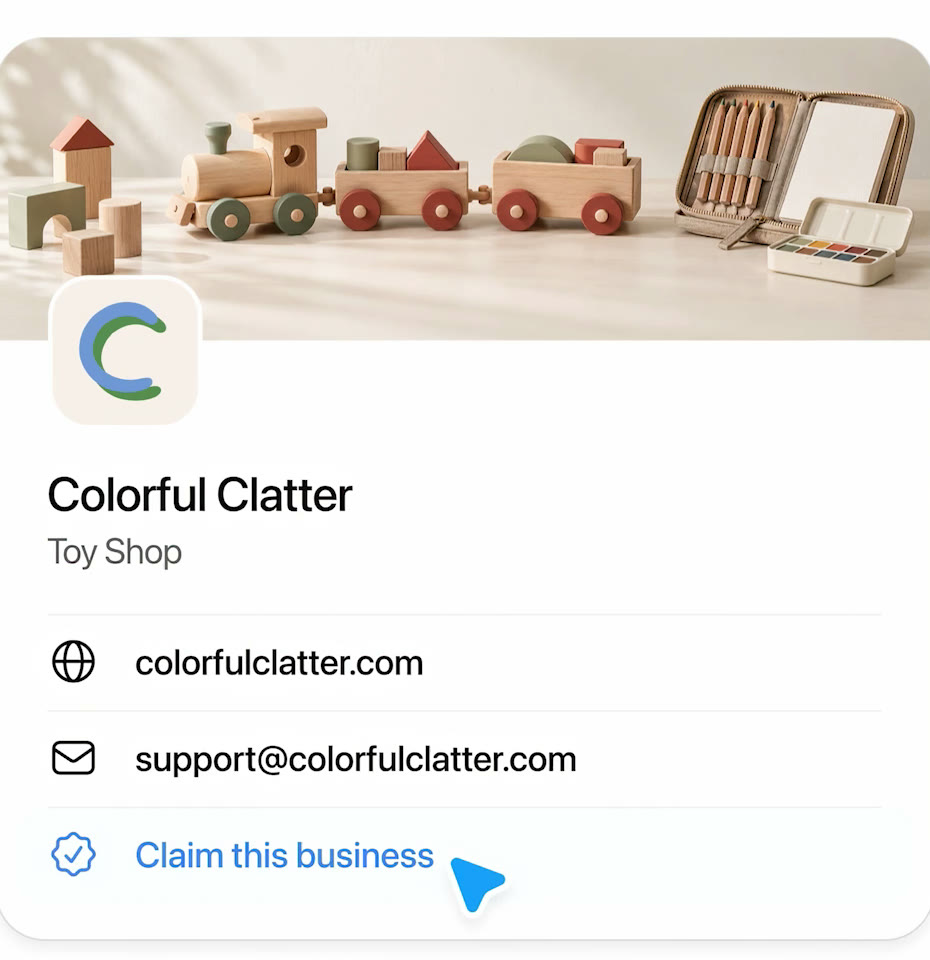
OpenAI's demo business, from its own launch video (1).
2. Verify. Shopify merchants get a streamlined path and can connect from Business Hub or from the Shopify admin. Eligible Shopify products were already reaching ChatGPT through Shopify Catalog before this launch, so for those merchants this is a shorter step than it looks.
3. Upload the product feed. Prices and availability, kept current. This is the only input into the whole system that you fully author, and it is the one that updates.
4. Build an agent, if you are allowed to. This is the gate most of the coverage skipped.
The Business Agent is a US-only beta under that eligibility, and OpenAI has published no pricing for it and no sales-results numbers from it. Nobody outside the pilot can tell you what it converts at, including the people writing confident threads about it this week.
The ads detail is worth reading twice. A sponsored placement can now send someone into a conversation with your agent rather than to your website. The landing page, for that traffic, is a chat your context file wrote.
What the dashboard will not tell you
Business Hub reports aggregated insights: how many times ChatGPT mentioned you, how many clicks went to your website, and "discovery topics", the common themes across conversations where your site was cited.
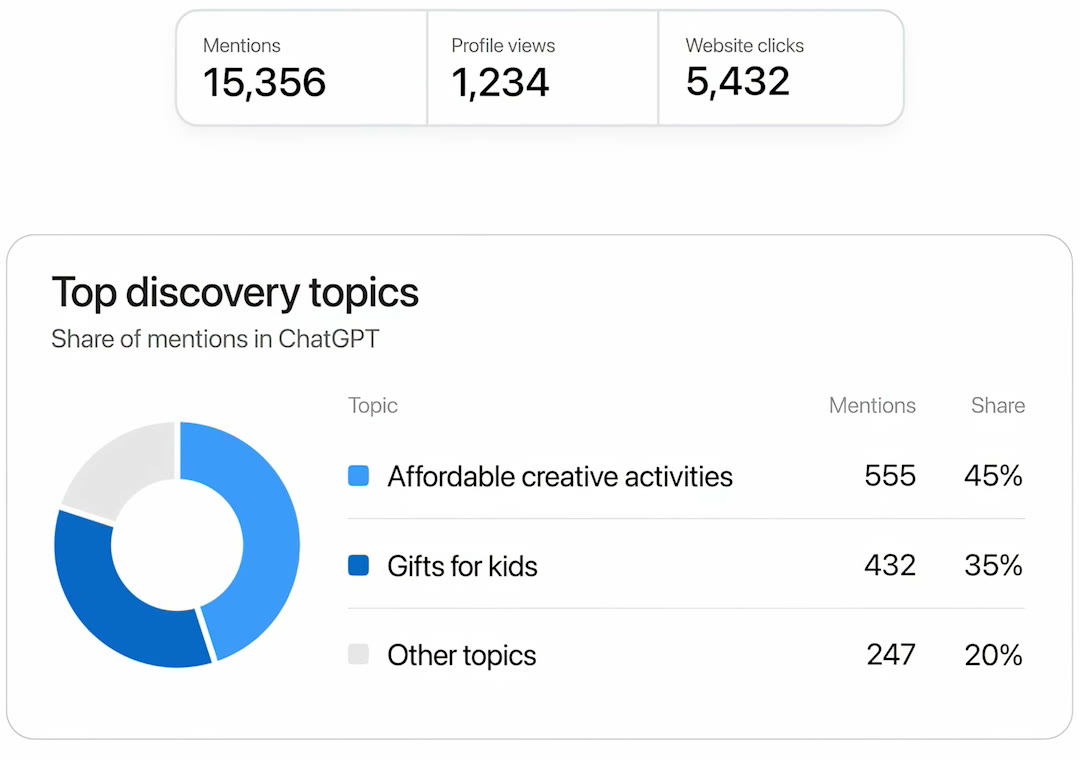
Illustrative figures from OpenAI's demo business, not real data. Frame from its launch video (1).
What it does not report is the thing anyone who has ever run a search channel asks for first. You cannot see the prompts. You cannot see who you were compared against. OpenAI says so plainly, and gives a reason.
That is a defensible choice and OpenAI states the reason for it, which is user privacy. It is also a real constraint on how you can work. In search you optimised against a query report. Here there is no query report, so you are tuning an input you control against an outcome you can only see in aggregate.

Isenberg
"the dashboard tells you how often chatgpt mentions you but HIDES the prompts and your competitors, so you still can't see why you're winning or losing"
His other line from the same thread is the practical one: your product feed is your new SEO. It is the only input into this system that you fully author, it updates, and it carries price and availability. The same structured feed is what decides whether an agent can buy from you at all, and how many stores are already wired for them. For a lot of companies that makes a structured feed more valuable than the blog, which is an uncomfortable sentence for a publication but appears to be true.
The context file is the actual work
A Business Agent only knows what you tell it. It answers from the information you put in the Hub, in a conversation that is labelled and held separate from ChatGPT's own answers. That means the quality of the thing talking to your customer is the quality of a document somebody at your company wrote on a Thursday.
Most companies have never written that document. They have a website written for skim-reading, a price list in a spreadsheet, and the real answers to the hard questions sitting in the heads of two people in support. None of that is a context file, and the gap between those two artifacts is the whole job.
Write it as if a stranger will be quoted from it, because they will. Answer the comparison questions your support team answers daily, in plain language, with the trade-offs named.
Isenberg makes one more argument in the same thread that is worth holding onto: he is not sure people want to talk to a brand's agent at all, and expects they will want their own agent to talk to it for them. If he is right, the reader of your context file is eventually another model doing comparison shopping on someone's behalf, which raises the value of structure and lowers the value of adjectives.
One more thing to do this week
Set your baseline now. You will never get prompt-level data, so record mentions, clicks and discovery topics this week and treat the trend as the instrument. A number you started measuring late tells you nothing.
Discovery topics deserve one last note. It is the one genuinely new piece of information in the dashboard: a list of the subjects ChatGPT already associates with you. Read it as an editorial brief, not a vanity metric.
Claim it, then feed it.

Founder of nativefirst.ai. Runs everything on agents and writes down what works.