OpenCommerce Wired 5,026 Stores for Agents. Amazon included.
Three weeks after Amazon was reported to be blocking agents, a startup shipped one endpoint that buys from 5,026 stores. Amazon tests at 100%.

On October 30 a company called Agentcard shipped opencommerce, which it describes as the OpenRouter for commerce: one endpoint, every online store. The counter on its own site reads 5,026 stores.
Amazon is one of them.
Three weeks earlier, the question on the table was whether the largest retailer on the internet would serve agent traffic or block it. Shopify, Stripe and Walmart had publicly committed to serving it. Amazon was absent from the list, and Paul Graham called that absence the biggest opening he had seen in thirty years.
Somebody took the opening in twenty two days. Not by building an Amazon competitor. By routing through Amazon.
5,026
Stores reachable from one endpoint, per the vendor's own counter.
1%
Of every completed order, charged to the agent developer. Not to the store.
100%
Amazon's success rate on the public monitor, 45 days running.
The product is six lines of TypeScript. You hand your agent a buy tool, and the prompt does the rest.
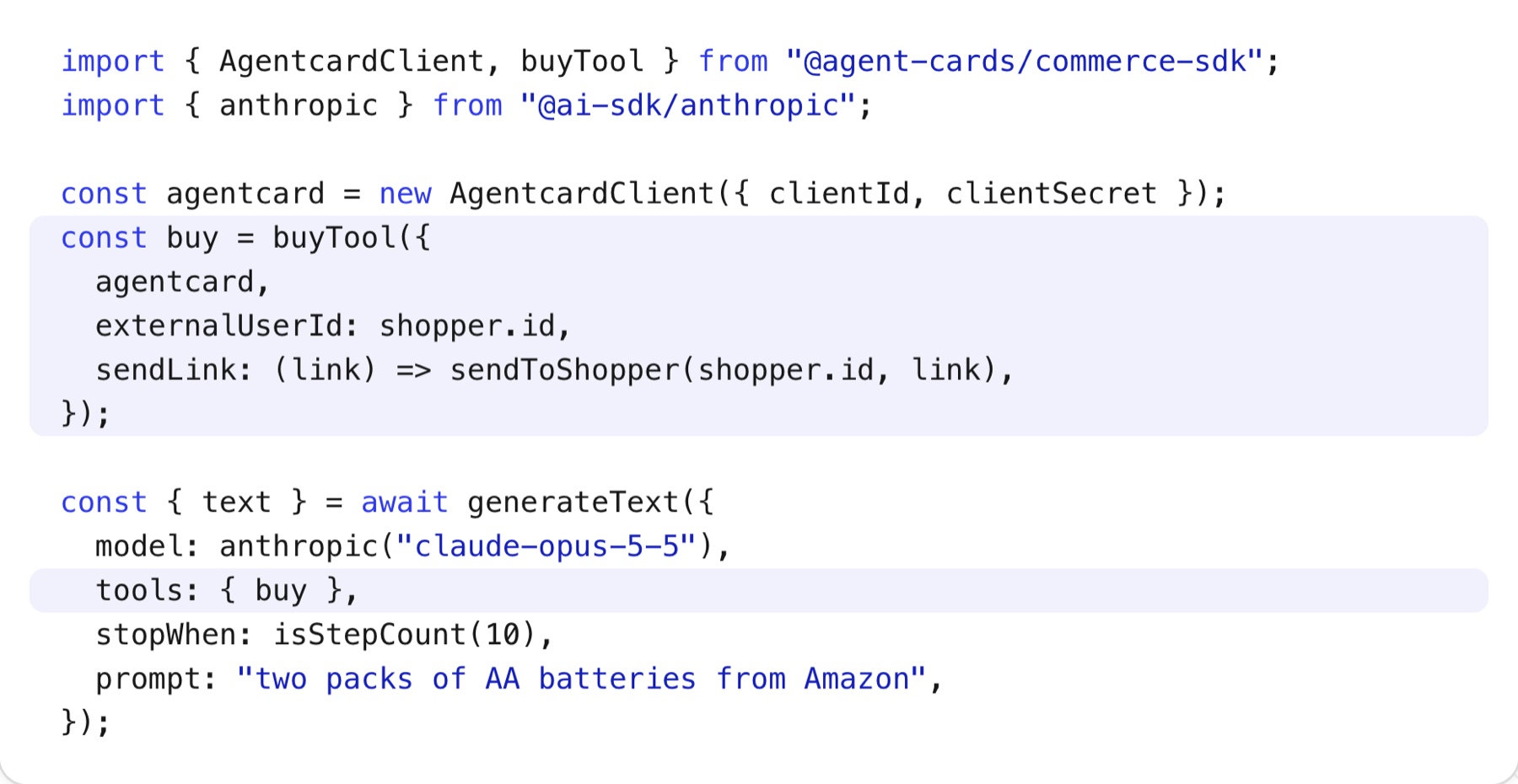
From opencommerce.sh. Six lines, one of which is a sentence a person would say out loud.
The part that makes it checkable
Most agent-commerce launches are a video. This one ships a public monitor. They run the whole purchase flow at each tracked store, search to cart to checkout, and publish the pass rate and the response time next to the merchant's name.
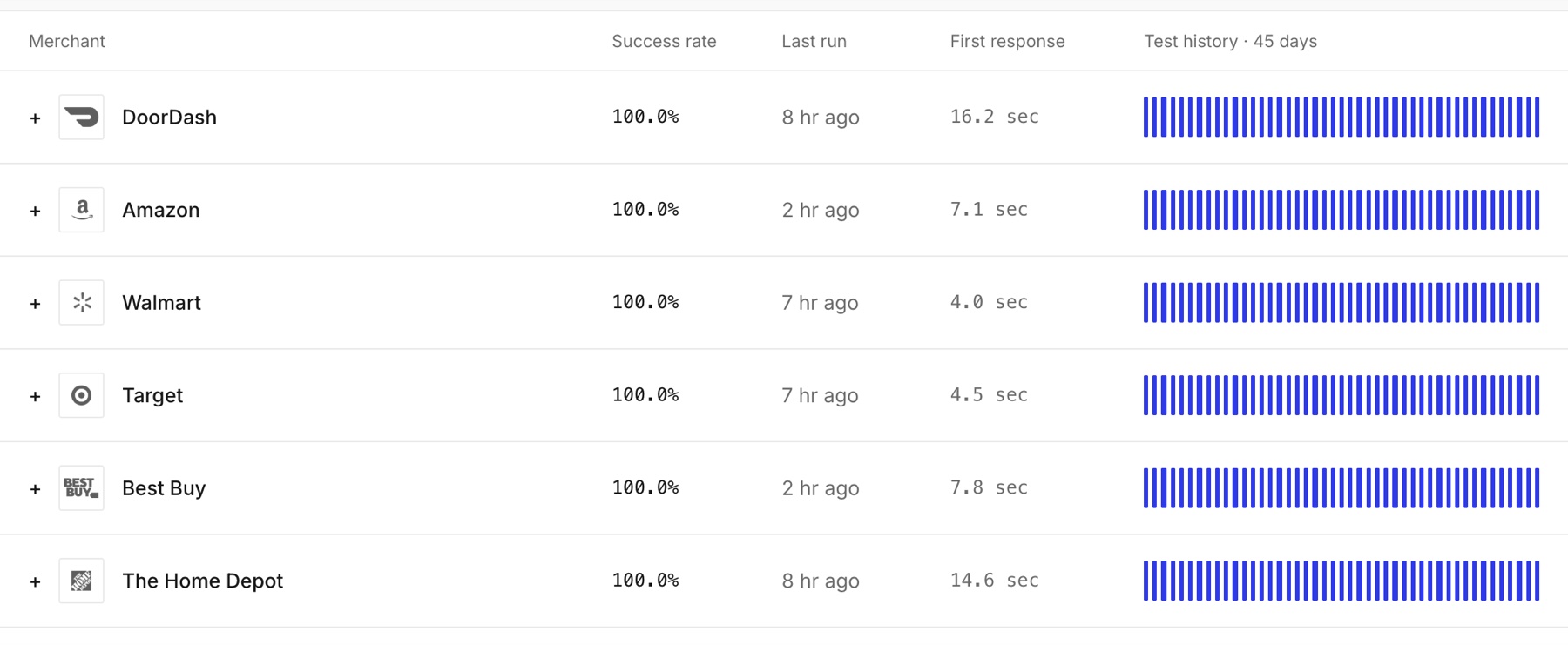
The vendor's own tests, published by the vendor. That is weaker than an audit and far stronger than a demo reel.
Read the Amazon row again. Not a workaround that sometimes clears. A tested purchase path, running every couple of hours, passing for a month and a half.
Who pays, and who never finds out
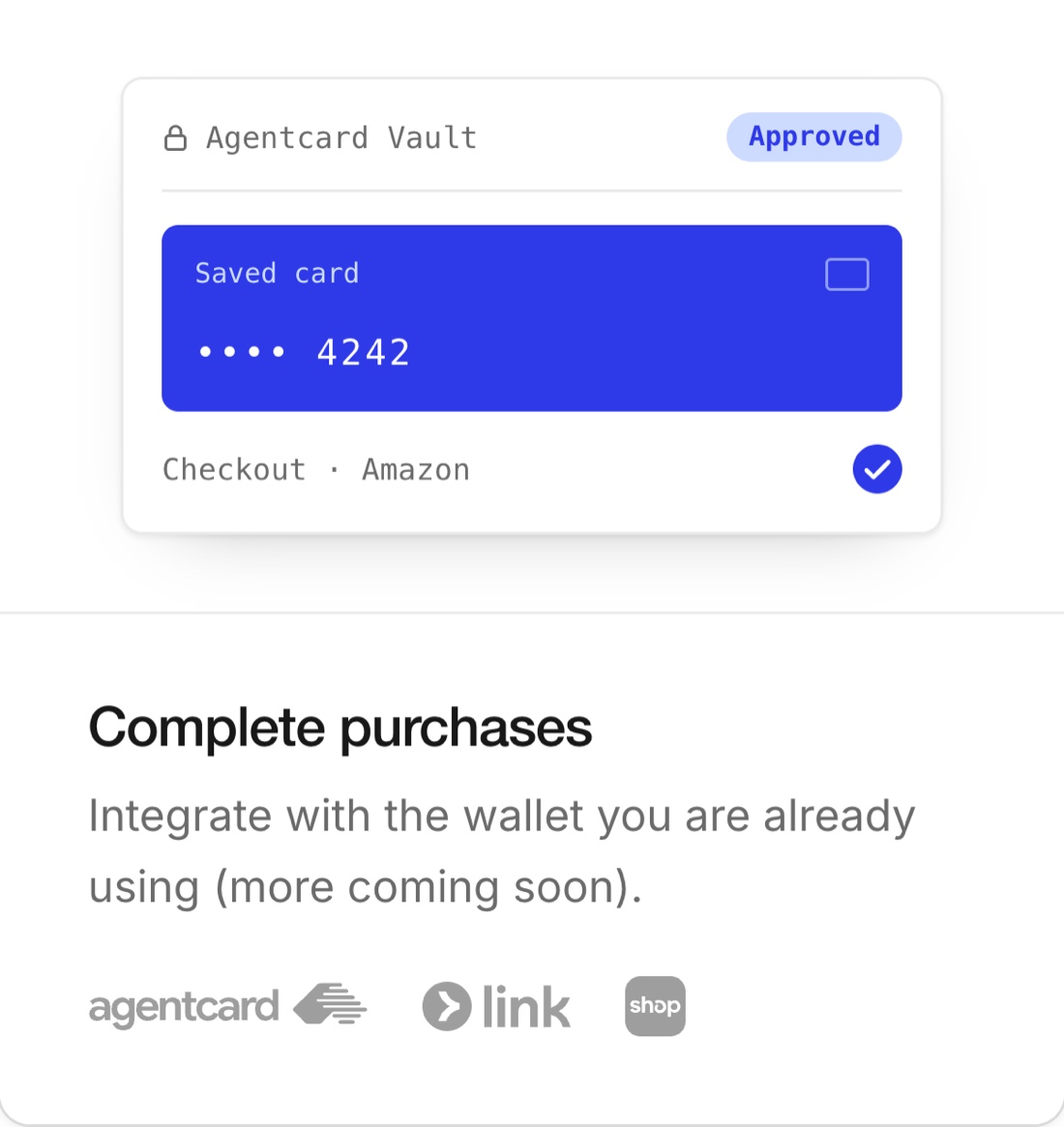
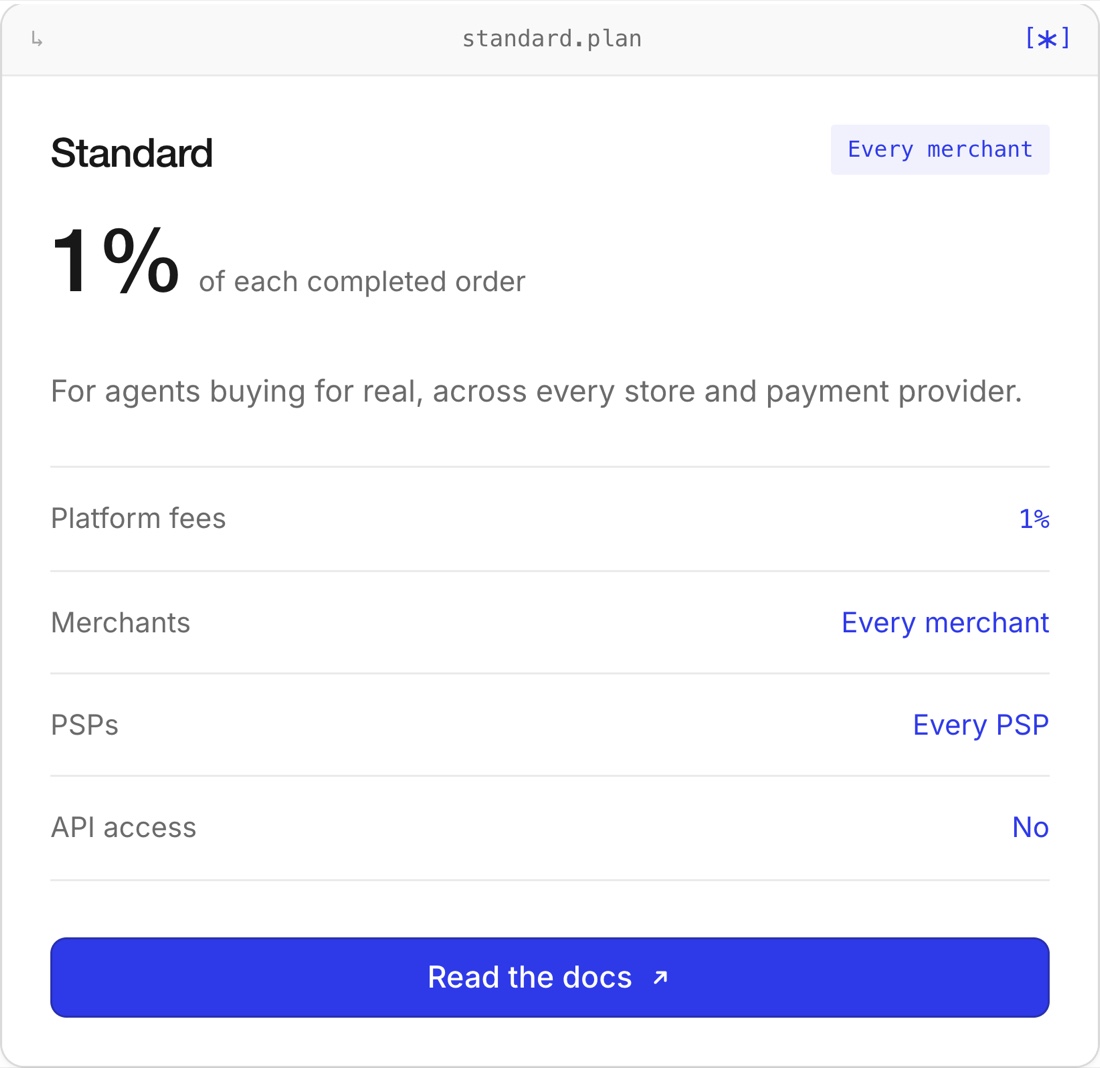
The two halves of the business model. One takes the payment, the other takes the cut.
That is the structural point, and it changes the decision a seller is making.
A month ago the choice looked like serve agents or block them. It was not. The real choice is serve them yourself or get resold. Blocking the front door does not keep agents out of a catalogue that an intermediary can drive with a browser, a saved card and a test suite. It only means somebody else owns the integration, sets the price of access, and keeps the data about what agents were trying to buy.
Olivia Moore at a16z made the general version of the point the same week, about a different partnership. Her carve-out is the interesting part.

Moore
"The dominoes are starting to fall on legacy platforms embracing agent traffic. With the exception of Amazon and their massive physical logistics as a moat, I think ultimately every platform is going to have to move this direction."
She wrote that the same day opencommerce launched with Amazon in the table at a 100% pass rate. Both things can be true. Logistics is a genuine moat and it is not the same asset as control of the buying surface. Amazon can own the warehouse and still lose the decision about which product the agent adds to the cart.
Why twenty seconds is the real spec
The speed claim is the part that separates this from the long tail of agent shopping demos. A cold route takes two minutes forty. A warmed one takes nine seconds.
What is still unproven
Four things, and an operator should hold all of them.
The tests are the vendor's. A 100% pass rate published by the company whose revenue depends on it is a claim, not an audit. It is checkable, which is more than most launches offer, and it is still self-reported.
The mechanism is not documented. Nothing on the site says how a purchase at a store with no agent API is actually completed. If the answer is driving the storefront, then every one of those 5,026 integrations is one layout change away from failing, and a store that wants it to stop can make it stop.
Coverage is uneven. On the October 30 snapshot of the monitor, eBay, McMaster-Carr and TikTok Shop were each labelled "no product search", Gymshark was "planned tests only" and Locale was "subscriptions only". A store in the count is not the same as a store an agent can shop.
Nobody has priced the fight. A 1% toll on somebody else's catalogue works until the catalogue's owner objects. There is no Amazon statement here, in either direction.
What to do about it this quarter
If you sell anything online, the question is no longer whether to support agent checkout. It is whether you would rather be a row in somebody else's monitoring table.
Two cheap moves. First, find out whether agents are already completing purchases on your site, which means looking at your own traffic for sessions that search, cart and check out in nine seconds. Second, decide what you want to happen when they do, because the default is now being decided for you by a third party with a test suite and a price list.
Blocking was never the wall. It was a toll booth, and somebody else is collecting.

Founder of nativefirst.ai. Runs everything on agents and writes down what works.