On August 19, Merck and Moderna announced that INTerpath-001 met both of its endpoints. It is the first Phase 3 win for any mRNA-based cancer therapy, and an AI system picked its targets. Moderna's stock closed up 177% in a day. Short sellers lost a reported $5.5 billion by the closing bell.
So: has AI found a vaccine for cancer? No. Four things have to be said before the interesting part, and each one matters.
It is not a vaccine. Merck and Moderna deliberately avoid the word. The drug is intismeran autogene, an individualized neoantigen therapy. A vaccine prevents a disease you do not have. This is given to people who already had cancer, after surgeons cut it out, to teach the immune system to recognize that specific tumor if it tries to come back.
It is not a cure. The trial tested adjuvant treatment of completely resected stage IIB to IV melanoma, always alongside Keytruda, up to nine doses. It lowers the risk of recurrence. It does not treat active metastatic disease, and it is not given to healthy people.
The Phase 3 numbers do not exist yet. The companies published a topline result, no hazard ratios and no percentages, with full data promised at a future medical meeting. Any Phase 3 figure circulating right now is somebody recycling the Phase 2b data, which showed roughly 49% lower recurrence risk and 59% lower distant-metastasis risk at three years.
Nobody can get it. It is not approved anywhere. Filing discussions are pending, helped by FDA Breakthrough Therapy and EMA PRIME designations that compress review. One outside oncologist put likely availability at early 2027.
Now the interesting part. Strip away what this is not, and what remains is the clearest picture yet of how AI creates value inside a serious operation. Not as magic. As two boxes in a six-box workflow, inside a program that has been running since 2016.
What the AI actually did
The therapy, intismeran autogene, works like this. After surgery, the patient's tumor and blood are sequenced, which is standard genomics, not AI. Then Moderna's algorithms take over for one decision: out of the hundreds of mutations in that tumor, predict up to 34 neoantigens most likely to provoke that patient's immune system. Those 34 get encoded into a single custom mRNA, manufactured per patient, and injected alongside Keytruda. One more AI layer runs in the background: Maestro, the scheduling system that places each patient's individual batch onto the manufacturing line.
Worth restating what the AI did not do, because the distinction is the point. It did not design the platform, which took a decade. It did not invent the checkpoint inhibitor it is given with. It did not run the surgery or the 1,137-patient trial. It made one prediction that no human could make reliably at that scale, and one scheduling decision that no human could make fast enough.
"A software problem"
The commentary split into a maximal and a precise version. The maximal one:
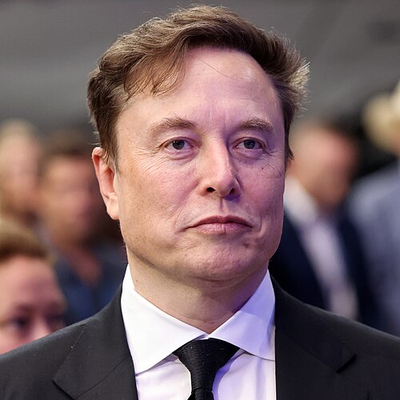
Musk
"Despite its obvious misuse during Covid, mRNA has tremendous promise for curing diseases. Artificial RNA essentially makes curing diseases a software problem."
And the precise one, from the cardiologist who has tracked this program for years:
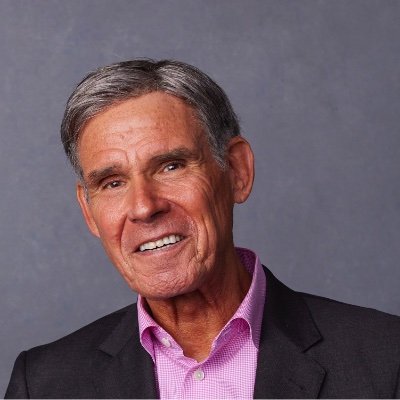
Topol
"The mRNA vaccine success vs melanoma in a definitive Phase 3 randomized trial today is on top of signs of success for personalized mRNA neoantigen vaccines vs pancreatic cancer, triple negative breast cancer, and non-small cell lung cancer."
Musk's framing is seductive and half right. mRNA does make the payload programmable: same platform, new sequence, new target. But "software problem" implies the model is the medicine. It is not. The medicine is a platform a decade in the making, plus surgery, plus a checkpoint inhibitor, plus 1,137 patients in a randomized trial. What became software is the two decisions in the middle: which 34 mutations, and whose batch runs Tuesday.
Why this matters outside biotech
This is what the application layer winning looks like. Moderna did not bolt a chatbot onto oncology. It found the two points in its workflow where a learned ranking beats a human heuristic, wired models into exactly those points, and let the rest of the operation stay an operation. That is the same shape as routing tasks to cheaper models or an agent working a support queue: narrow decision, deep integration, measurable loop. The 90% of the pipeline that is not AI is what makes the 10% that is AI worth anything.
The feedback loop is the moat. Moderna says the selection algorithm learns from each trial's immunogenicity data feeding back into the next prediction. Ten years of paired decisions and outcomes is a dataset no competitor can shortcut, which is the same reason generic data lakes stopped being moats: closed loops are.
Conviction pays late and all at once. Moderna entered this week down roughly 90% from its 2021 peak, mid-layoffs, with US government mRNA contracts cancelled. One Phase 3 readout later it tripled intraday. If you run a company deploying AI into a real workflow, that chart is the honest expectation: the compounding is invisible until it is undeniable.
So, back to the question. AI has not found a vaccine for cancer, and the people who built this are careful never to say it did. What happened is smaller and more useful: a decade-old platform, a working drug, and a learned ranking function sitting at the one step where a human heuristic was the bottleneck. That combination just cleared a Phase 3 for the first time.
If your company is waiting for AI to arrive as a miracle, this is the shape it actually arrives in.
Two boxes. Ten years. One readout.
Keep reading.
Teardowns, benchmarks and playbooks on building AI-native products.
Browse the Playbook →