Every few weeks a product ships and the timeline decides a category was born. Grok Bot got that treatment on August 11, 2026. Persistent agent, its own computer, keeps working while you sleep, nothing like it before.
Check the repo dates.
NousResearch/hermes-agent was created on July 22, 2025. openclaw/openclaw was created on November 24, 2025. Note the order, because most of the commentary has it backwards. Hermes came first, so this is not a succession from OpenClaw to Grok Bot. It is two open-source tracks running in parallel for over a year, then a managed product that shipped the same idea with the hard parts removed.
Which parts got removed is the whole decision.
What the open-source pair actually built
OpenClaw is TypeScript, built by Peter Steinberger: an open agent platform that runs on your machine and works from the chat apps you already use, across fifteen-plus channels. At 386,900 GitHub stars it is the most-starred non-aggregator software project on GitHub and the fastest repo ever to 250,000. It got there under three names, Clawd to Moltbot to OpenClaw, after Anthropic's legal team politely asked it to reconsider.
The memory design is worth stealing whichever tool you pick. Everything is plain Markdown in ~/.openclaw/workspace: USER.md and MEMORY.md, dated daily files, a DREAMS.md. The model only remembers what gets saved to disk, and there is no hidden state. A background pass called dreaming promotes short-term observations into permanent memory. You can read your agent's brain in a text editor, grep it, and move it.
Hermes goes the other way. Python, MIT licence, 233,456 stars, the agent that grows with you. Self-hosted or run through Hermes Cloud, model-agnostic across 300-plus models rather than tied to one lab. Its differentiator is self-improvement: the agent writes its own skills and a background curator deletes the ones nobody uses. Nous Research was in funding talks at a $1.5B valuation in July 2026.
Both broke in the same place, and it was not the intelligence. OpenClaw's five-minute heartbeat cron kept the agent alive by making it think on a timer, and thinking meant preloading memory. HN commenter Gareth321 called the architecture extremely inefficient, heavy in LLM compute, and prone to failure, because every time OpenClaw needs to think it preloads a huge amount of memories into the query. Something as simple as "what time is it" can chew through tens of thousands of tokens. Steinberger did not argue. In April 2026 he changed the defaults so the CLI disables features that use excessive tokens, heartbeat included. He also reported spending $1.3M on OpenAI tokens in thirty days.
The state of the art before Grok Bot: real persistence, real memory, a machine you had to own, a daemon to keep alive, a token meter to watch.
What Grok Bot removed
The last three. Genuine achievement, not a repackaging.
Avi Chawla drew the line on August 20. OpenClaw and Hermes are self-hosted, so the machine can be a laptop, a VPS, or a container someone already pays for. Grok Bot runs on a machine SpaceXAI provisions and operates. Musk quote-tweeted him the same day: it has its own remote computer, so it keeps working even when you close your laptop or reboot your desktop. Big difference.
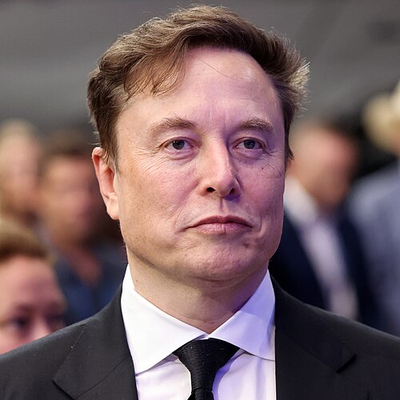
Musk
"Grok @Bot has its own remote computer @SpaceXAI, so keeps working even when you close your laptop or reboot your desktop. Big difference."
He is right, and any operator who has lost an agent to a laptop lid knows it. Andrew Wilkinson, August 13: Grok Bot equals OpenClaw for normal people. Miles Deutscher's guide is fair to both. The open-source pair are genuinely powerful, he wrote, but they require you to configure your own always-on machine. Grok Bot is completely plug-and-play. You download it, log in, and you have a running agent team without touching infrastructure.

Deutscher
"With Grok Bot, you're trading data sovereignty for convenience. Grok Bot is closed, cloud-hosted, and built entirely on a fixed pricing model you don't control."
The bill: Grok models only, one persistent cloud computer per account rather than per bot, $120 to $300 a month. The token meter is gone, replaced by a fixed price you do not control.
The counter-ship shows how thin the moat is
Nous shipped Bot Mode for Hermes 51 hours after Grok Bot launched, then formally launched it on August 17. Their framing on August 20 was deliberately unimpressed: they have had profiles for months, and Bots is a simple UX affordance on top. They posted the pricing weapon directly under Musk's own tweet. The cheapest Hermes Cloud plan is 3 cents per day when idle and 29 cents for nonstop usage.
Three cents against $120 a month. Allow for every asymmetry in what those cover and it still lands.
OpenClaw did not counter-ship. Its next release is publicly late, and on August 14 the org thanked people for being patient while they finish this properly. Steinberger's only substantive reply that day was a question rather than a feature: which of them is optimized to run on your own hardware, where you keep control over data and memories? He joined OpenAI in February 2026, and OpenClaw now sits with a foundation.
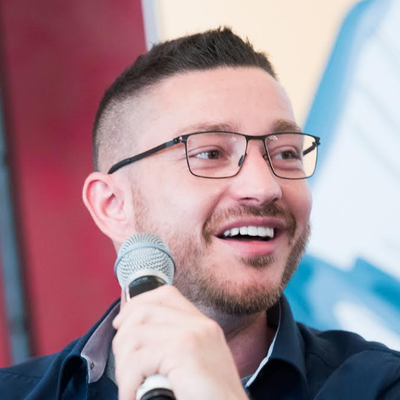
Steinberger
"Which of them is optimized to run on your own hardware, where you keep control over data and memories?"
One conclusion falls out. The persistent-agent pattern is not defensible engineering. A well-resourced open-source team replicated the headline feature in two days. What Grok Bot has is distribution, a default install path, and an app your non-technical colleagues will actually open. Real advantage. Not a technical one.
Decide the lock-in question before you teach it anything
Here is the part people skip. The value of these agents is not the software. It is the weeks you spend teaching it: your accounts, your conventions, your customers, your tone, the twenty corrections that turn a generic assistant into one that works the way your company works. That context is the asset. The question at week zero is whether you can carry it out.
With OpenClaw and Hermes the answer is yes by construction. The memory is Markdown on a disk you control. Change models, hosts, or tools and the files come with you. With Grok Bot the memory sits on a machine SpaceXAI provisions and operates, tied to Grok models and a fixed price, with no documented way to lift it out.
Matt Van Horn's rule: decide the lock-in question before you sink weeks of teaching into it. Grok Bot is the zero-setup path, OpenClaw and Hermes are the portable ones.
Three cases. Personal or low-stakes work where the point is getting fluent fast: take Grok Bot, skip the VPS. Anything touching customer data or internal systems: self-host and pay the setup tax, because you cannot retrofit sovereignty later. Undecided: get properly fluent with Claude Code first, as Deutscher advises. You will learn more, faster, for a fraction of the cost, and get most of what Grok Bot can build anyway.
The convenience is real. The bill arrives in portability, late, after the teaching is done.
Decide before you teach.
Keep reading.
Teardowns, benchmarks and playbooks on building AI-native products.
Browse the Playbook →